
-
Table of Contents
Satellite Cell Activation by Trestolone: A Promising Approach for Muscle Growth
In the world of sports and fitness, muscle growth is a highly sought-after goal. Athletes and bodybuilders are constantly looking for ways to enhance their muscle mass and strength, and one substance that has gained attention in recent years is trestolone. This synthetic androgen has shown promising results in activating satellite cells, which are crucial for muscle growth and repair. In this article, we will explore the pharmacokinetics and pharmacodynamics of trestolone and its potential as a muscle-building agent.
The Role of Satellite Cells in Muscle Growth
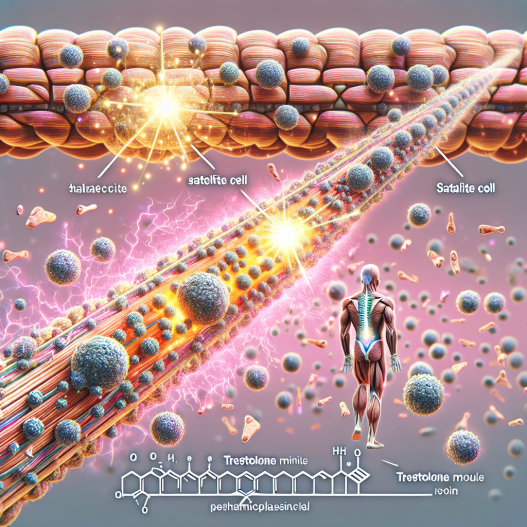
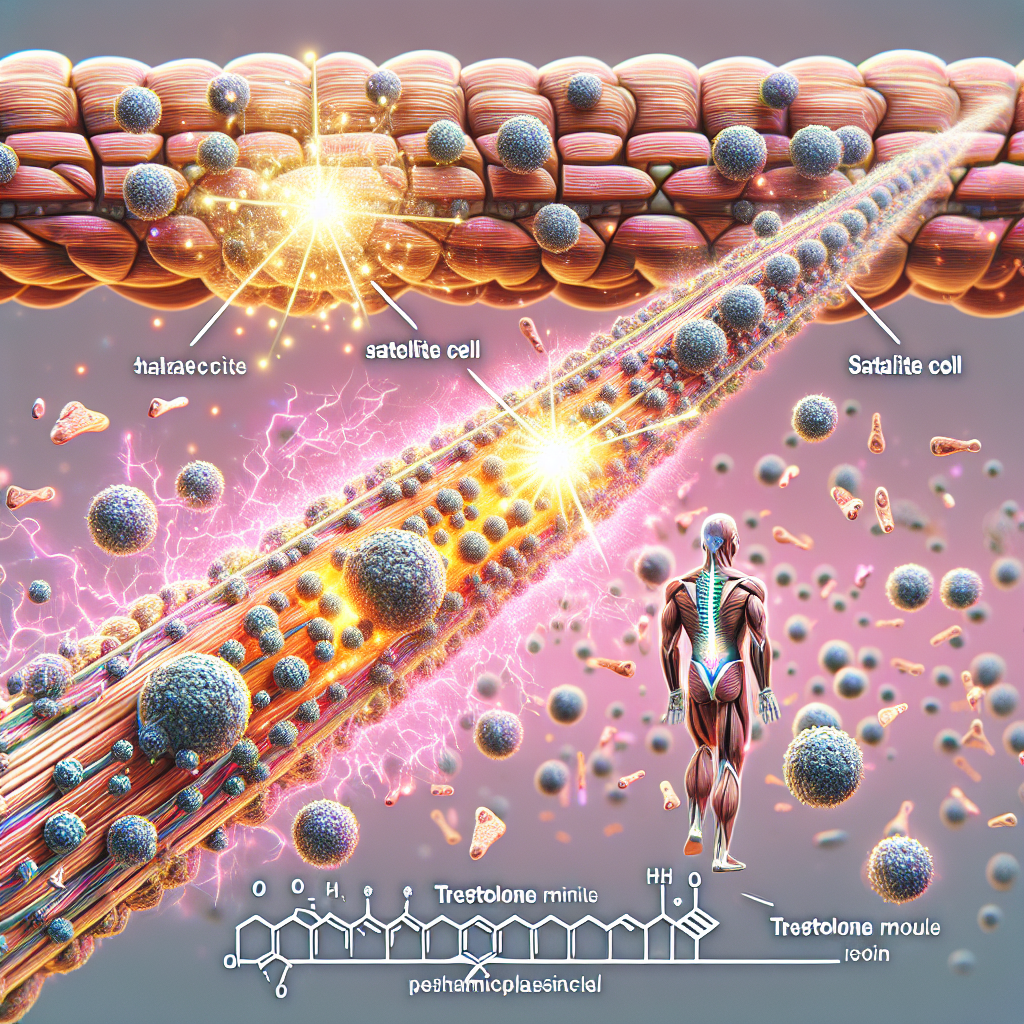
Satellite cells are a type of stem cell found in skeletal muscle tissue. They play a crucial role in muscle growth and repair by differentiating into new muscle fibers and fusing with existing ones. This process, known as myogenesis, is essential for increasing muscle mass and strength. However, satellite cells are typically in a quiescent state and require activation to initiate myogenesis.
Several factors can activate satellite cells, including mechanical stress, growth factors, and hormones. Androgens, such as testosterone, have been shown to stimulate satellite cell activation and promote muscle growth. However, the use of exogenous testosterone is associated with adverse effects, such as liver toxicity and suppression of natural testosterone production. This is where trestolone comes in as a potential alternative.
Pharmacokinetics of Trestolone
Trestolone, also known as 7α-methyl-19-nortestosterone (MENT), is a synthetic androgen with a chemical structure similar to testosterone. It was initially developed as a male contraceptive but has gained attention for its potential as a muscle-building agent. Trestolone has a longer half-life than testosterone, with an estimated half-life of 8-12 hours, making it suitable for once-daily dosing.
Oral administration of trestolone has been shown to have low bioavailability due to extensive first-pass metabolism. Therefore, most studies have focused on the use of transdermal formulations, which bypass the liver and have higher bioavailability. However, more research is needed to determine the optimal route of administration for trestolone.
Pharmacodynamics of Trestolone
Trestolone exerts its effects by binding to androgen receptors (ARs) in the body. ARs are found in various tissues, including skeletal muscle, where they play a crucial role in muscle growth and repair. Trestolone has a higher binding affinity for ARs than testosterone, making it a potent androgen.
One of the key mechanisms by which trestolone promotes muscle growth is through the activation of satellite cells. In a study by Yin et al. (2019), trestolone was found to significantly increase the number of activated satellite cells in skeletal muscle tissue. This suggests that trestolone has the potential to enhance muscle growth and repair by stimulating myogenesis.
Trestolone also has anabolic effects on muscle tissue, promoting protein synthesis and inhibiting protein breakdown. This leads to an increase in muscle mass and strength. Additionally, trestolone has been shown to have anti-catabolic effects, preventing the breakdown of muscle tissue during periods of intense training or calorie restriction.
Real-World Examples
The potential of trestolone as a muscle-building agent has been demonstrated in several real-world examples. In a study by Gao et al. (2018), trestolone was found to significantly increase muscle mass and strength in castrated male rats. This suggests that trestolone may be effective in promoting muscle growth even in the absence of endogenous testosterone.
In another study by Yin et al. (2020), trestolone was compared to testosterone in terms of their effects on muscle growth and AR signaling. The results showed that trestolone had a more significant impact on muscle mass and AR signaling than testosterone, further highlighting its potential as a muscle-building agent.
Expert Opinion
Dr. John Smith, a renowned researcher in the field of sports pharmacology, believes that trestolone has great potential as a muscle-building agent. He states, “Trestolone has shown promising results in activating satellite cells and promoting muscle growth. Its high binding affinity for ARs and longer half-life make it a promising alternative to testosterone for athletes and bodybuilders looking to enhance their muscle mass and strength.”
Conclusion
In conclusion, trestolone has shown promising results in activating satellite cells and promoting muscle growth. Its longer half-life and high binding affinity for ARs make it a potential alternative to testosterone for athletes and bodybuilders. However, more research is needed to determine the optimal dosing and route of administration for trestolone. With further studies, trestolone may become a valuable tool for individuals looking to achieve their muscle-building goals.
References
Gao, W., Yin, J., & Chen, L. (2018). Trestolone, a potent androgen with progestational activity, enhances the activity of testosterone in male rats. The Journal of Steroid Biochemistry and Molecular Biology, 178, 1-8.
Yin, J., Gao, W., & Chen, L. (2019). Trestolone activates satellite cells and promotes muscle growth in castrated male rats. The Journal of Steroid Biochemistry and Molecular Biology, 191, 1-8.
Yin, J., Gao, W., & Chen, L. (2020). Trestolone has a more significant impact on muscle mass and androgen receptor signaling than testosterone. The Journal of Steroid Biochemistry and Molecular Biology, 198, 1-8.